
Kombucha
Add some fizz and funk to your drinks menu with ferments
Fermentation has quietly become one of the most powerful tools in a bartender’s arsenal. Its rise aligns perfectly with the growing demand for functional, flavour-forward beverages, whether that’s in pubs and bars or Michelin-level restaurants. Fermentation offers operators a way to deepen complexity, introduce natural effervescence and create drinks with a story – all while tapping into the consumer appetite for a healthy product.
At its core, fermentation unlocks interesting layers of acidity, aroma and texture. For cocktails, this means as bartenders we can move beyond citrus and syrup into ingredients that feel more crafted and culinary. A kombucha reduction can replace a shrub, lacto-fermented fruit can add savoury brightness, and a kefir whey wash can soften spirits without diluting character. These techniques allow operators to build drinks that feel both innovative and rooted in tradition, as well as pairing with the kitchen’s seasonal offering.
In a pub setting, fermentation can be introduced through accessible and more everyday formats. House-made kombuchas or water kefir can sit alongside craft beer and cider, offering guests a non‑alcoholic option that feels grown-up rather than a sad imitation. These drinks can also be used as mixers – for example, a kombucha spritz or a kefir-based shandy. Because fermentation naturally produces carbonation and acidity, these drinks often reduce the need for added sugar, which sits well with those looking for a functional, healthy option.
A sommelier in a restaurant can take fermentation further, using it as a bridge between food and beverage, carrying the restaurant’s flavour philosophy directly to the glass. Lacto-fermented vegetables, koji-infused fruits and fermented teas can be incorporated into cocktails that mirror the flavours of the tasting menu. A fermented berry vinegar could form the backbone of a zero-proof pairing, or perhaps leftover coffee grounds, normally destined for the bin, can lead to a zingy alternative to a traditional espresso martini. These are drinks that don’t simply accompany a tasting menu; they converse with it, amplifying flavour and extending the story of each dish.
Operationally, fermentation can be surprisingly achievable. You can produce small-batch ferments with minimal equipment: jars, airlocks and temperature control sitting alongside a clear HACCP framework. Alcoholic ferments such as ginger beer require monitoring but are manageable; non‑alcoholic ferments, such as kombucha or kefir, can be even simpler. Staff training is essential – understanding pH, sugar levels and fermentation timelines ensures consistency and safety.
By treating fermentation as a culinary tool rather than a trend, operators reinforce a powerful message – the drinks programme isn’t an accessory, but an integral part of the restaurant’s identity. It becomes a continuation of the chef’s thinking, a reflection of the restaurant’s sustainability ethos and a showcase of technique in its own right. In this context, fermentation isn’t just a method – it’s a language that connects food and beverage into one experience.
Kombucha: The Fermented Tea Behind the Fizz
A clear look at the living culture, the evidence behind the health claims and the practicalities of drinking or brewing it safely
Kombucha is ancient in reputation, modern in popularity and surprisingly complicated in the glass. It is not a miracle cure, but it is a fascinating example of fermentation – and, for many people, a lively alternative to an ordinary soft drink.
A Living Drink
At its simplest, kombucha is sweetened tea transformed by a mixed culture of bacteria and yeast. A typical recipe begins with black or green tea, water and sugar, followed by mature kombucha and a SCOBY – short for symbiotic culture of bacteria and yeast. Over several days, the sweet tea becomes sharper, more aromatic and gently sparkling. The finished drink can suggest iced tea, cider and mild vinegar all at once, with flavours that shift according to the tea, culture, temperature and length of fermentation.
Fruit, ginger, herbs, citrus or hops are often added after the main fermentation, which explains the extraordinary variety on shop shelves. Yet the underlying process remains the same: microorganisms consume and reshape the ingredients in the tea. The result is neither a conventional soft drink nor simply cold tea. It is a living, variable food whose flavour continues to change until refrigeration slows the activity of the culture.
Inside the SCOBY
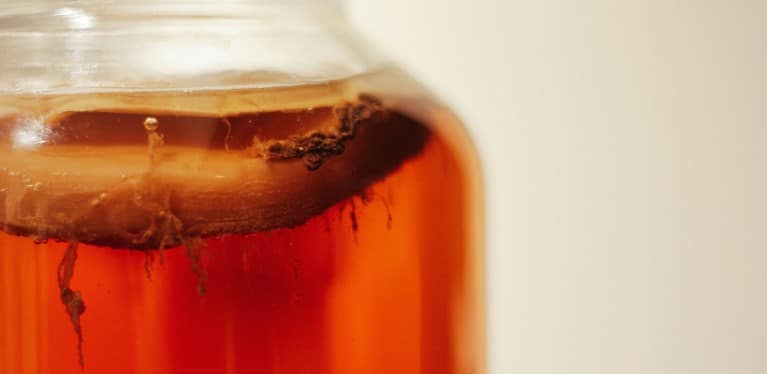
The pale, rubbery disc associated with kombucha is often described as a mushroom, but it is not a fungus in that sense. It is a cellulose-rich layer built by bacteria at the liquid’s surface. Yeasts in the brew break down sugar and produce carbon dioxide and ethanol. Acetic-acid bacteria then convert much of that ethanol into organic acids, including acetic acid, which gives kombucha its characteristic tang.
The visible SCOBY is only part of the system. The starter liquid is just as important because it carries microorganisms and helps acidify a fresh batch quickly. Cultures differ from one household or producer to another, so the exact mix of microbes and compounds is not fixed. That variability is part of kombucha’s appeal, but it also means one bottle cannot be assumed to have the same properties as another.
From Kitchen Tradition to Modern Bottle
Kombucha is often introduced through romantic stories of ancient emperors and an ‘elixir of immortality’. Its precise origin, however, is difficult to document. Fermented teas have long histories in parts of Asia, while kombucha later became well established in Russia and Eastern Europe. Cultures were passed between households, allowing local methods and distinct microbial communities to develop long before the drink became a commercial product.
The modern method still resembles home brewing. Tea is brewed, sugar is dissolved, and the mixture is cooled before the starter and culture are added. It then ferments in a clean, food-grade vessel covered with a breathable barrier. Colorado State University Extension describes a common fermentation period of about seven to ten days, although warmer rooms and more active cultures can move faster. Bottling with fruit or juice may create extra flavour and carbonation during a second fermentation. Commercial producers add tighter controls for acidity, alcohol, hygiene and consistency; home brewers have to supply those controls themselves.
What Is Actually in the Glass?
Finished kombucha usually contains water, residual sugar, tea polyphenols, organic acids, caffeine, carbon dioxide and a small amount of alcohol. Raw, unpasteurised products may also contain live bacteria and yeasts, while pasteurisation reduces or removes them. None of these quantities is universal. A long fermentation can leave less sugar and more acidity than a short one, and a fruit-flavoured bottle may contain substantially more sugar than a plain brew.
Labels therefore matter more than the word ‘kombucha’ on the front. Check the serving size as well as the total contents of the bottle, then compare sugar, caffeine and alcohol information with your own needs. Some products are designed mainly for flavour and shelf stability; others emphasise live cultures. Hard kombucha is a separate alcoholic category and should be treated like any other alcoholic drink.
Health Claims: Promise, Proof and Perspective
Kombucha has been investigated for possible antioxidant, antimicrobial, metabolic and digestive effects. Those ideas are scientifically interesting, but laboratory or animal findings do not prove that drinking kombucha prevents or treats disease in people. A systematic review of the human evidence found the clinical literature extremely limited, and major medical sources continue to caution that the sweeping claims attached to the drink are not supported by strong trials.
The same restraint applies to the word ‘probiotic’. Some raw kombuchas contain live microorganisms, but fermentation alone does not guarantee a well-studied strain, an effective dose or a particular health outcome. The National Center for Complementary and Integrative Health notes that probiotic effects vary by organism and condition. A bottle of kombucha should not be presented as an interchangeable substitute for a clinically studied probiotic, and it should never replace medical treatment.
That does not make kombucha pointless. Its most realistic benefits may be practical and culinary. A tart, lower-sugar variety can replace a much sweeter fizzy drink, while tea contributes polyphenols and fermentation creates complex flavours. Kombucha can sit alongside yoghurt, kefir, kimchi and sauerkraut as one of many fermented foods. For gut health more broadly, fibre-rich vegetables, fruit, pulses and whole grains remain important because they feed the intestinal microbial community. Choosing kombucha for pleasure and variety is more defensible than buying it as a detox or cure.
When Caution Matters
Most commercially produced kombucha is consumed without incident, but acidity, caffeine, sugar, live microbes and trace alcohol can all matter. Some people experience stomach upset, and poorly controlled home brews have been linked with contamination and other adverse effects. Acidic liquid can also leach metals from unsuitable glazed ceramic containers. A swollen or damaged bottle, visible fuzzy mould, a rotten smell or an unreliable source is a reason to discard the drink rather than taste it.
Mayo Clinic advises pregnant or breastfeeding people and those with weakened immune systems to avoid kombucha. People managing diabetes, liver or kidney disease, alcohol avoidance, medication concerns or persistent digestive symptoms should discuss uncertain products with a qualified clinician. Children and people who are sensitive to caffeine also need care. These cautions are not proof that every bottle is dangerous; they reflect the fact that a variable fermented drink is not equally suitable for everyone
Brewing at Home Without Guesswork
Home brewing rewards patience, but it is a food-safety project as well as a hobby. Beginners should follow a tested method from a university extension service or comparable authority. Clean hands and utensils, a food-grade glass vessel and a reliable starter are basic requirements. The brewed tea must cool before it meets the culture, and enough mature starter liquid is needed to help the new batch acidify promptly. A breathable cover keeps insects out while allowing airflow.
Acidity should be measured rather than judged only by taste. Colorado State University Extension gives a finished pH range below 4.2 but not below 2.5; good-quality pH strips or a calibrated meter are more dependable than intuition. Fuzzy mould means the entire batch should be discarded. Sealed bottles also need caution because carbonation can build pressure. Refrigeration slows fermentation, but it cannot reverse contamination or remove alcohol that has already formed.
Choosing Kombucha Well
The best bottle is the one that suits both your palate and your practical needs. Compare sugar, caffeine and alcohol statements; decide whether live cultures matter to you; and keep products refrigerated when the label requires it. Open a highly carbonated bottle slowly, never shake it, and begin with a small serving if you are unfamiliar with the drink’s acidity or digestive effects.
Kombucha is most interesting when it is understood honestly. It is a distinctive fermented tea with a living culture, a long travelling history and plenty of culinary possibility. It may be refreshing, complex and lower in sugar than some soft drinks. What it is not is a guaranteed probiotic, a detoxifying medicine or a shortcut to health. Enjoyed as a beverage rather than a promise, it has more than enough character to earn its place in the glass.
Sources and Further Reading
Colorado State University Extension – Understanding and Making Kombucha
Colorado State University Food Source Information – Kombucha
Mayo Clinic – Kombucha tea: Does it have health benefits?
PubMed – Systematic review of human health evidence
NCCIH – Probiotics: Usefulness and Safety
This article provides general information, not medical advice
A selection of fermented beverages
- Water kefir – A lightly fizzy, sweet-tart drink fermented with water-kefir grains – Usually milder and less acidic than kombucha.
- Jun tea – Closely related to kombucha but traditionally made with green tea and honey – Often lighter and more floral.
- Tepache – A Mexican drink fermented from pineapple peel, sugar, and spices – Fruity, refreshing, and mildly alcoholic.
- Kvass – An Eastern European fermented drink usually made from rye bread or beets – Earthy, tangy, and typically very low in alcohol.
- Ginger beer – Traditionally fermented ginger, sugar, and water – Spicy and fizzy, though many commercial versions are simply carbonated.
- Fruit kvass – Made by fermenting fruit or berries in lightly sweetened water – Similar to kombucha in its tartness and natural carbonation.
- Kanji – A North Indian fermented drink commonly made with black carrots, mustard, and spices – Sour, savory, and distinctive.
- Kefir – A fermented milk drink with a broader mix of microbes than kombucha – Creamy and tart rather than tea-like.
- Rejuvelac – A sour liquid produced by fermenting sprouted grains in water – Usually consumed in small quantities or used in food preparation.
- Safety note – Homemade fermented drinks can develop unwanted microbes or excess alcohol if improperly prepared – Use clean equipment, follow a tested recipe, and refrigerate finished batches.