
A Short History of Vinegar
INGREDIENT SERIES -By Gourmet Classic | Ringwood, Hampshire
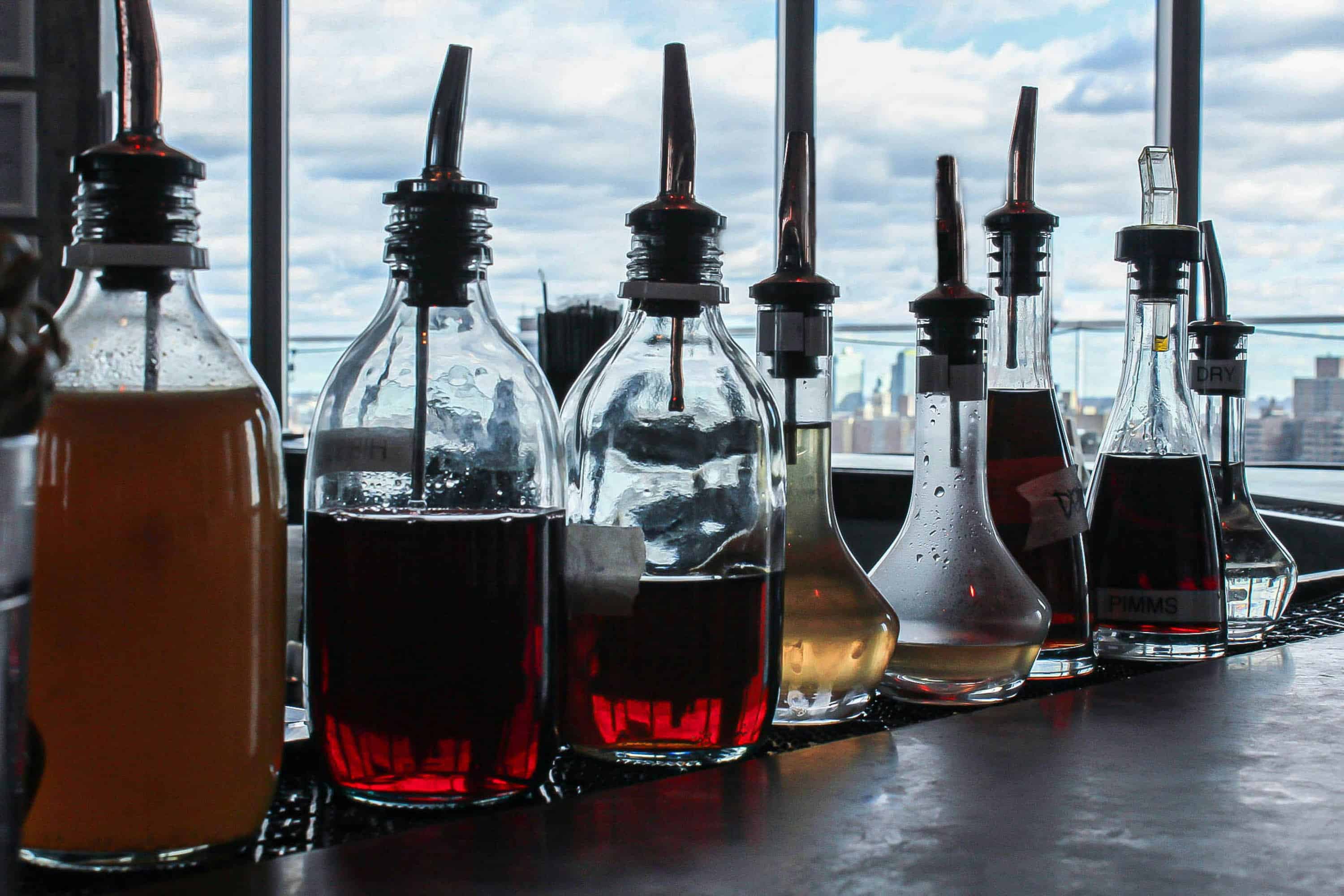

At Gourmet Classic, Vinegar is something we think about rather a lot. Understanding where vinegar comes from — and why it matters — is central to everything we do. Here’s a history of one of the world’s most remarkable ingredients.
Where does Vinegar come from?
Vinegar is, quite simply, as old as civilisation itself. Traces have been found in Egyptian urns dating to around 3000 B.C., with Babylonian scrolls referencing its use even earlier — around 5000 B.C. The ancient world understood its value long before anyone could explain the chemistry behind it.
Vinegar in the Ancient World
Known to Roman soldiers as posca — a mixture of vinegar, water, and herbs carried on campaign — it was both a practical thirst-quencher and a rudimentary antiseptic. The acidic environment it created was inhospitable to many of the pathogens that made untreated water lethal on the march. Roman legions crossed continents sustained partly by this sharp, humble liquid. Even the Bible records it: soldiers offering vinegar to Christ at the Crucifixion were likely sharing the only drink they had.
Vinegar in Mediaeval Europe
In mediaeval Europe, vinegar found an even more dramatic role. During the Black Death of the 14th century, the so-called “Four Thieves Vinegar” — a preparation of vinegar steeped with garlic, rosemary, and other aromatic herbs — was reputedly used by grave robbers and plague doctors to protect themselves from infection. Whether it worked or not (and it may well have offered some protection against fleas, the true vector of the disease), it speaks to how deeply embedded vinegar was in the pre-modern understanding of health and hygiene. Barber-surgeons used it to clean instruments. Physicians prescribed it for everything from fever to melancholy.
The word itself derives from the Old French vinaigre — meaning, quite literally, “sour wine.”
The Science of Souring
At its core, vinegar is a sour liquid produced through a two-stage fermentation process. In the first stage, yeast converts sugars into alcohol in the absence of oxygen. In the second, bacteria of the genus Acetobacter convert that alcohol into acetic acid in the presence of oxygen — acetic acid being the compound responsible for vinegar’s defining sharpness.
Accidental Origins
For most of human history, this second stage was imperfectly understood. The first batches ever produced were almost certainly accidents — freshly pressed grape must fermenting at too high a temperature, allowing Acetobacter to overwhelm the yeast before it could finish its work. The result was wine that had “turned.” Early producers noticed they could replicate and even harness this process, and vinegar production gradually became deliberate craft.
Pasteur and the Microbiological Breakthrough
It wasn’t until 1858 that Louis Pasteur formally explained the microbiological basis of vinegar in his landmark work Études sur le Vinaigre, demonstrating that the souring process was biological rather than purely chemical. This was a significant milestone — part of the same body of research that would eventually overturn centuries of “spontaneous generation” theory and lay the foundations of modern microbiology.
The Orléans Method
Long before Pasteur, however, French producers around Orléans had developed what is now called the Orléans method — a slow, controlled surface fermentation in which wine is introduced gradually into barrels already containing mature vinegar (the “mother”), with Acetobacter working at the surface where it can access oxygen. The process takes weeks rather than hours, and the resulting vinegar is notably more complex than anything fast production can yield. It remains in limited use today, primarily among artisan producers who regard it as the only honest way to make wine vinegar.
Modern Industrial Production
This stands in sharp contrast to modern industrial methods. The submerged tank culture process, first described in 1949 by Otto Hromatka and Heinrich Ebner, continuously stirs and aerates a large tank of alcoholic liquid, maximising Acetobacter contact with oxygen and producing vinegar with up to 15% acetic acid in as little as two to three days. It’s efficient, consistent, and scalable — but it produces a one-dimensional product. The compressed timeline simply doesn’t allow for the development of secondary fermentation compounds, esters, and volatile flavour molecules that give a slow-produced vinegar its character.
Non-Brewed Condiment: what Vinegar is not
This is also why products like non-brewed condiment — widely used in the British chip shop trade as a cheaper alternative to malt vinegar — don’t technically qualify as vinegar at all. Made by diluting acetic acid derived from industrial wood distillation, they bypass the fermentation process entirely. The acidity is there; everything else is not.
A World of Regional Varieties
Because vinegar can be made from almost any fermentable liquid, its regional variations track closely with local agricultural traditions. What’s grown, what’s fermented for drink, and what’s left over all feed into what gets turned into vinegar.
Wine Vinegar
Wine vinegar is the backbone of European cooking — red wine vinegar bringing body and tannin, white wine vinegar offering brightness and delicacy. The best examples are made via slow fermentation from quality base wines; the worst are made quickly from the lowest-grade alcohol available.
Sherry Vinegar
Sherry vinegar from the denominación de origen in Jerez, Spain occupies a different register entirely. Aged in the same solera system used for sherry itself — a fractional blending method in which younger vinegar is continuously added to barrels containing progressively older product — the finest examples are aged for 25 years or more. The result is rich, nutty, and extraordinarily complex, with a depth that makes it almost more of a condiment than an acidulant.
Balsamic Vinegar of Modena
Balsamic vinegar from Modena, Italy is perhaps the most misunderstood vinegar in professional kitchens. True Aceto Balsamico Tradizionale di Modena DOP is made from cooked grape must, aged for a minimum of 12 years — and up to 25 or more — in a series of progressively smaller barrels made from different woods: oak, chestnut, cherry, mulberry, ash. Each wood contributes something different to the final flavour. The result bears almost no resemblance to the cheap balsamic glaze found in bulk catering packs, and carries a price tag to match. What’s sold commercially as “balsamic vinegar of Modena” is an entirely different, unaged product — blended, sweetened, and thickened — and the distinction matters.
Malt Vinegar
Malt vinegar is a distinctly British product, made from unhopped beer brewed from malted barley. Its flavour profile — grainy, slightly sweet, robustly acidic — is inseparable from the national fish and chip tradition, but it’s also a serious cooking vinegar with genuine backbone for pickling and braising.
Cider Vinegar
Cider vinegar made from fermented apple juice occupies a growing niche in professional kitchens, its fruity acidity making it particularly useful for dressings, reductions, and anything where a hard white wine vinegar would be too austere.
Culinary Craft
What unites all these varieties is acidity — but acidity deployed with intention is one of the most powerful tools in a professional kitchen. Vinegar doesn’t just make things sour. Used correctly, it lifts, brightens, and balances. A reduction sauce that tastes flat and one-dimensional often needs acid rather than salt. A braise that’s too rich and cloying will open up with a splash of something sharp introduced at the right moment.
Pickling, Dressings, and Condiments
Vinegar is central to pickling and preservation — the high acidity creating an environment hostile to spoilage bacteria, which is precisely why it was so valued before refrigeration. It forms the base of vinaigrettes and salad dressings, where the ratio of acid to fat determines everything. It appears in mustards, ketchups, mayonnaises, and chutneys, providing both flavour and preservative function. In marinades, the acetic acid begins to denature surface proteins in meat, aiding both flavour penetration and texture.
Asian Culinary Traditions
In Asian cooking traditions, vinegar performs more delicate work: seasoning sushi rice, cutting through rich braised pork belly, adding a final bright note to stir-fries. The mildness of rice vinegar compared to wine vinegar is not a deficiency — it’s a calibration for a different culinary context.
Beyond the Kitchen
Beyond cooking, vinegar remains a legitimate natural cleaning agent and surface sanitiser — a reminder that its antimicrobial properties, valued since antiquity, are not simply folk medicine. For a food-service environment, this makes it one of the few ingredients that earns its place in both the kitchen and the cleaning cupboard.
Few ingredients, across any cuisine, in any era, have quite the same breadth of usefulness — or quite the same depth of history behind them.