
Wine – Fact or Fiction
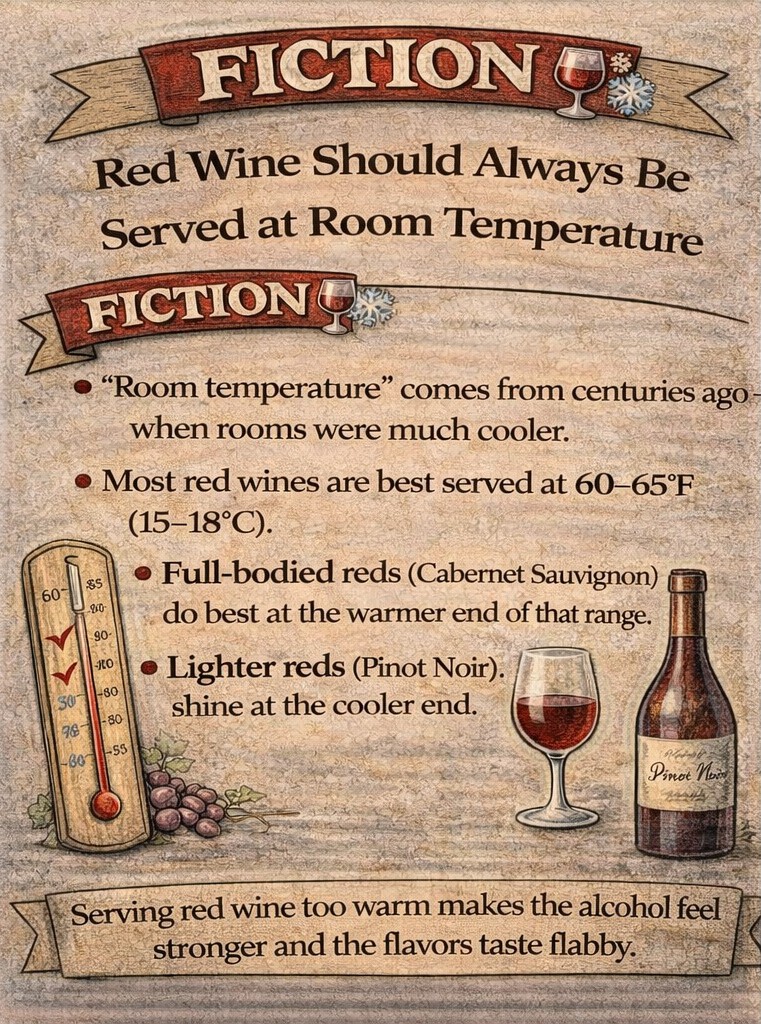
Red wine should always be served at room temperature
FICTION 🍷❄️ While it’s true that red wine shouldn’t be served ice-cold, “room temperature” is actually a myth from centuries ago when rooms were much cooler! Most red wines are best served slightly below modern room temperature, between 60-65°F (15-18°C). Full-bodied reds like Cabernet Sauvignon do well at the warmer end, while lighter reds like Pinot Noir shine at the cooler end. Serving red wine too warm can make the alcohol more prominent and the wine taste flabby
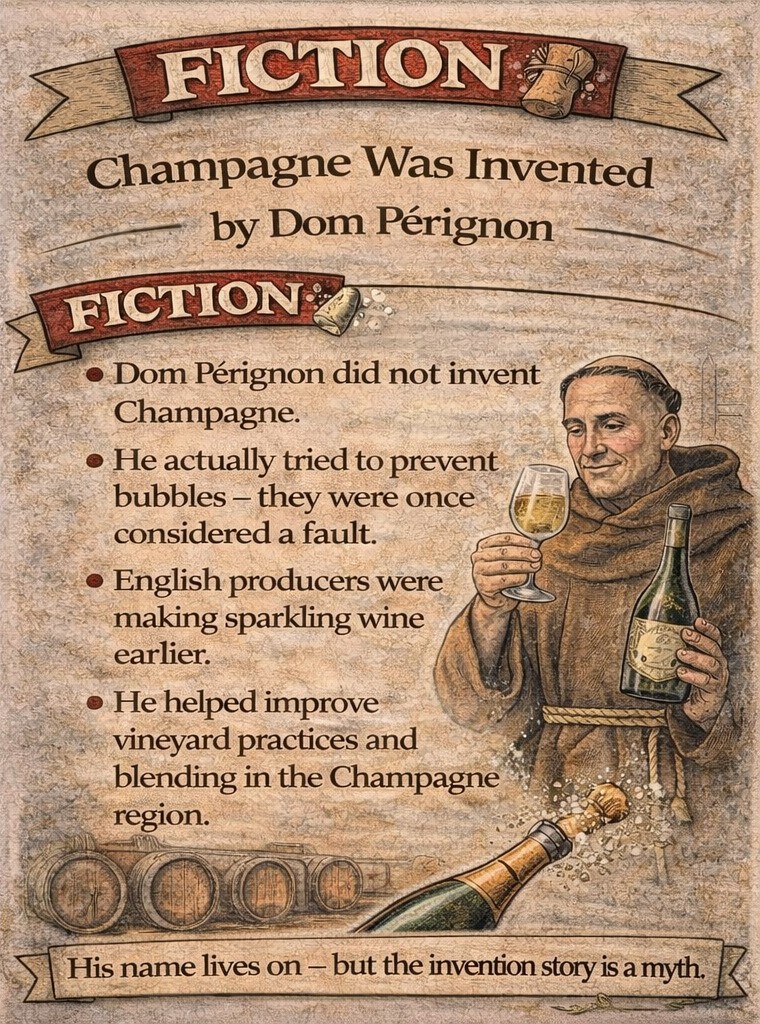
Champagne was invented by Dom Pérignon
FICTION 🍾💨 Despite popular belief, Dom Pérignon didn’t invent champagne. The famous Benedictine monk actually spent much of his career trying to prevent bubbles in wine, as they were considered a fault at the time! English wine merchants were actually producing sparkling wine before the French. However, Dom Pérignon did make significant contributions to improving wine quality in the Champagne region through better vineyard practices and blending techniques. The famous champagne house named after him honors his legacy, even if the invention story is fiction.
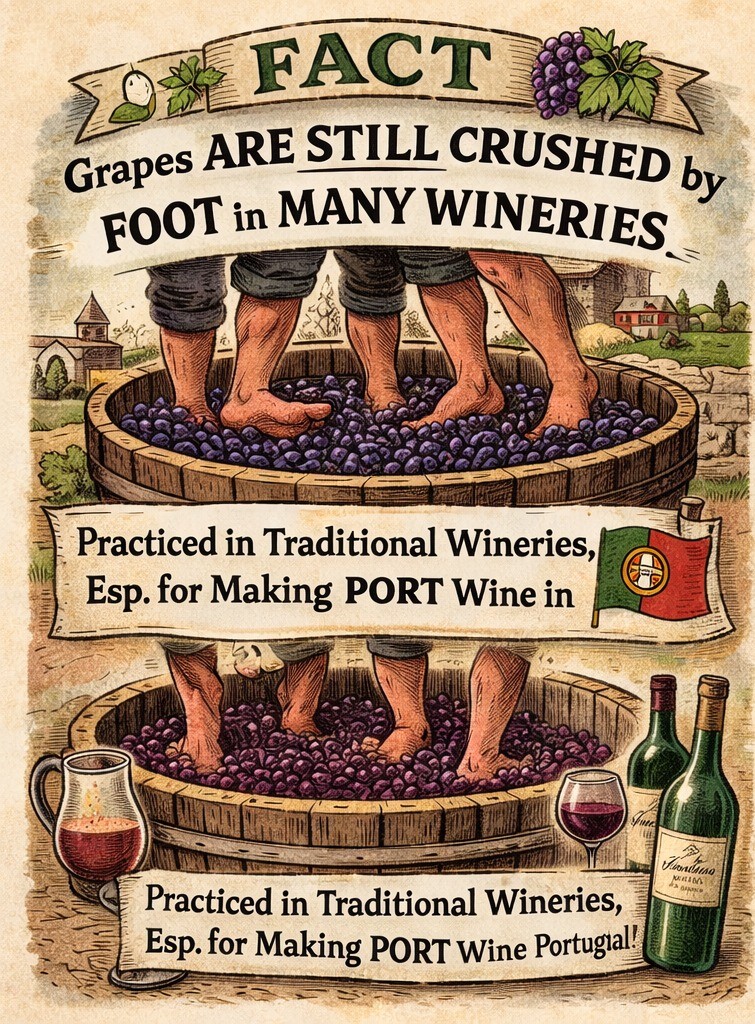
Grapes are still crushed by foot in many wineries
FACT 🦵🍇 Believe it or not, foot-treading (or “pigeage”) is still practiced in some traditional wineries, particularly in Portugal for making Port wine! The human foot is actually an excellent tool – it’s gentle enough not to crush seeds (which can release bitter tannins), yet firm enough to break grape skins. Modern wineries use mechanical crushers for efficiency, but some premium producers maintain foot-treading for certain wines as part of their tradition and quality standards. It’s also considered more sanitary than you might think, as the alcohol and acids in wine prevent bacterial growth.
Red wine comes from red grapes and white wine comes from white grapes
FICTION 🔴⚪ This is only partly true! While red wine typically does come from red (or black) grapes, white wine can be made from both white AND red grapes. The color in wine comes from the grape skins, not the juice – most grapes have clear juice inside. Champagne, for example, is often made from red Pinot Noir and Pinot Meunier grapes, alongside white Chardonnay. The winemaker simply removes the skins before fermentation to make “blanc de noirs” (white from blacks). This is why pressing red grapes gently and quickly can produce white or very pale pink wine!

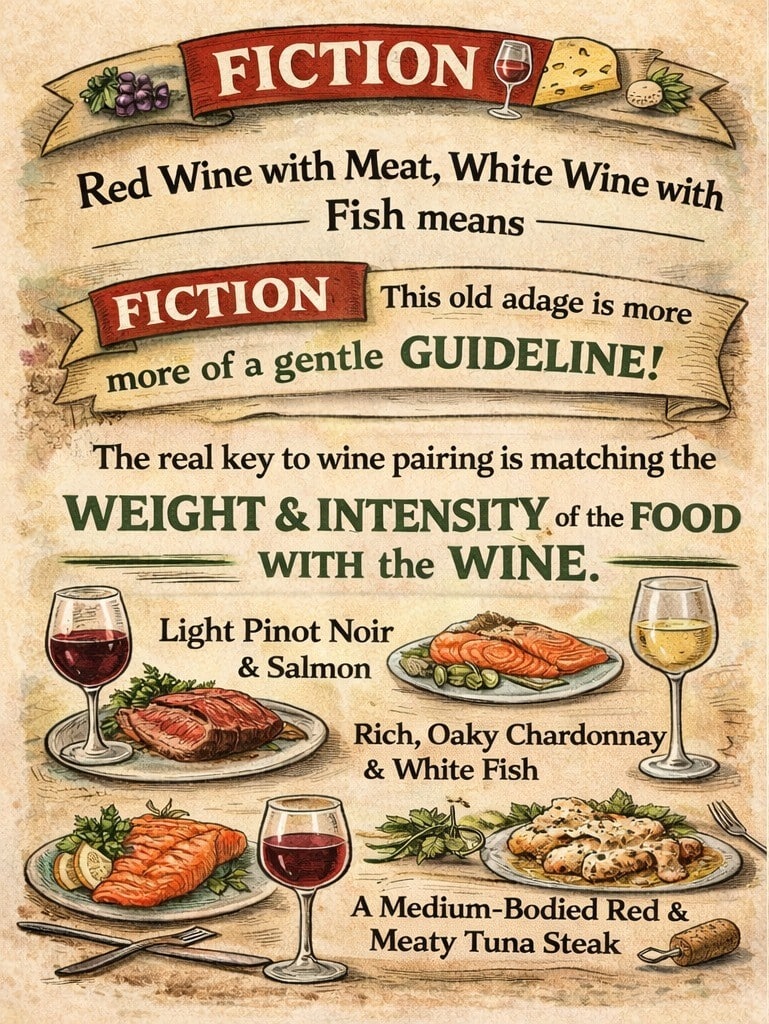
Red wine with meat, white wine with fish is a strict rule
FICTION 🍷🧀 This old adage is more of a gentle guideline than a hard rule! The real key to wine pairing is matching the weight and intensity of the food with the wine. A light red like Pinot Noir can be perfect with salmon, while a rich, oaky Chardonnay might overpower delicate white fish. Similarly, a meaty tuna steak might pair beautifully with a medium-bodied red. Consider the sauce, preparation method, and seasoning too – grilled chicken with a heavy cream sauce might call for different wine than herb-roasted chicken. The best rule? Drink what you enjoy!
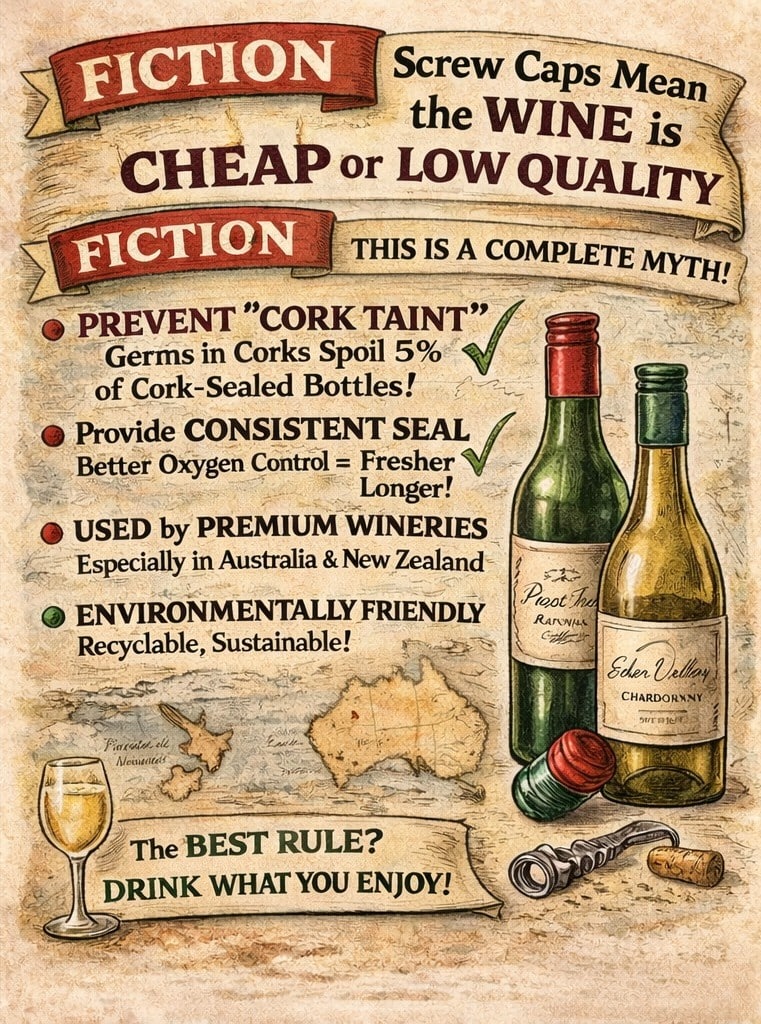
Screw caps mean the wine is cheap or low quality
FICTION 🔌🍷 This is a complete myth! Screw caps (technically called Stelvin closures) are actually excellent at preserving wine quality and preventing “cork taint” – a musty smell that affects about 5% of cork-sealed bottles. Many premium wineries, especially in Australia and New Zealand, use screw caps for their finest wines. Screw caps provide a consistent seal, allow less oxygen exchange than corks, and keep wine fresher longer. They’re also more convenient and environmentally sustainable. The only wines that arguably benefit from corks are those meant for decades of aging, where micro-oxygenation might be desirable.
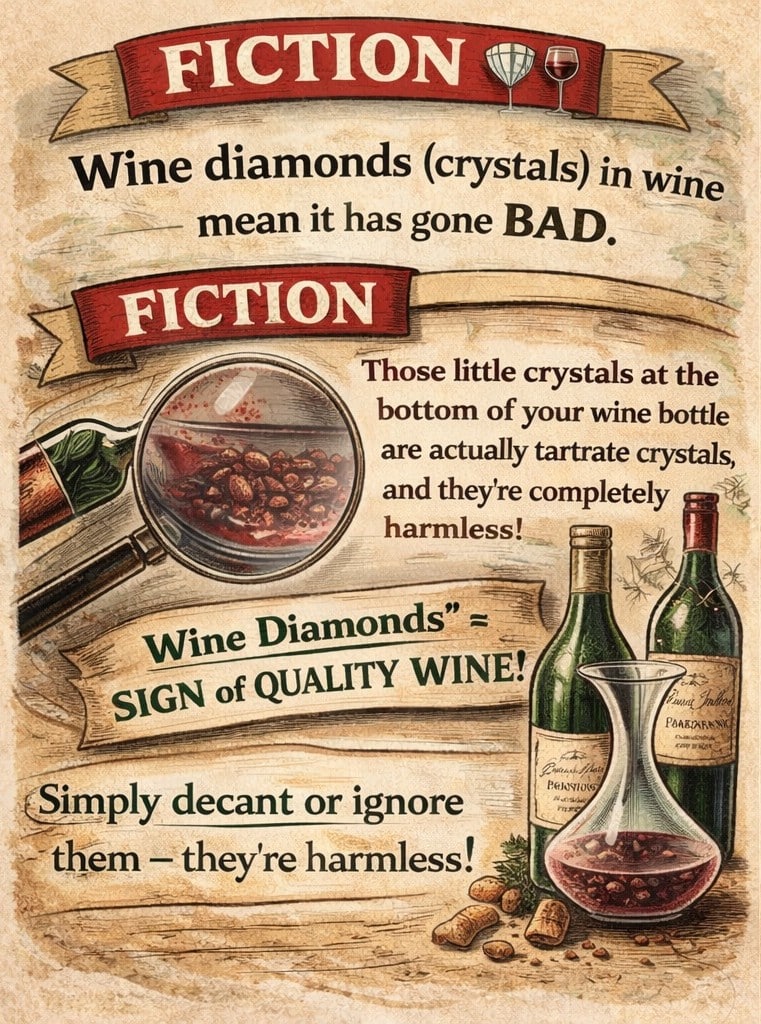
Wine diamonds (crystals) in wine mean it has gone bad
FICTION 💎🍷 Those little crystals at the bottom of your wine bottle are actually tartrate crystals, and they’re completely harmless! They form when tartaric acid (naturally present in grapes) crystallizes during cold storage. In fact, they’re often a sign of quality wine that hasn’t been over-processed. Many premium wineries deliberately don’t remove them because the process (called cold stabilization) can strip wine of flavor and texture. These “wine diamonds” won’t affect the taste, though they might feel slightly gritty. Simply decant the wine to leave the crystals behind, or just ignore them – they’re perfectly safe to consume.
Red wine with meat, white wine with fish is a strict rule
FICTION 🍷🧀 This old adage is more of a gentle guideline than a hard rule! The real key to wine pairing is matching the weight and intensity of the food with the wine. A light red like Pinot Noir can be perfect with salmon, while a rich, oaky Chardonnay might overpower delicate white fish. Similarly, a meaty tuna steak might pair beautifully with a medium-bodied red. Consider the sauce, preparation method, and seasoning too – grilled chicken with a heavy cream sauce might call for different wine than herb-roasted chicken. The best rule? Drink what you enjoy!
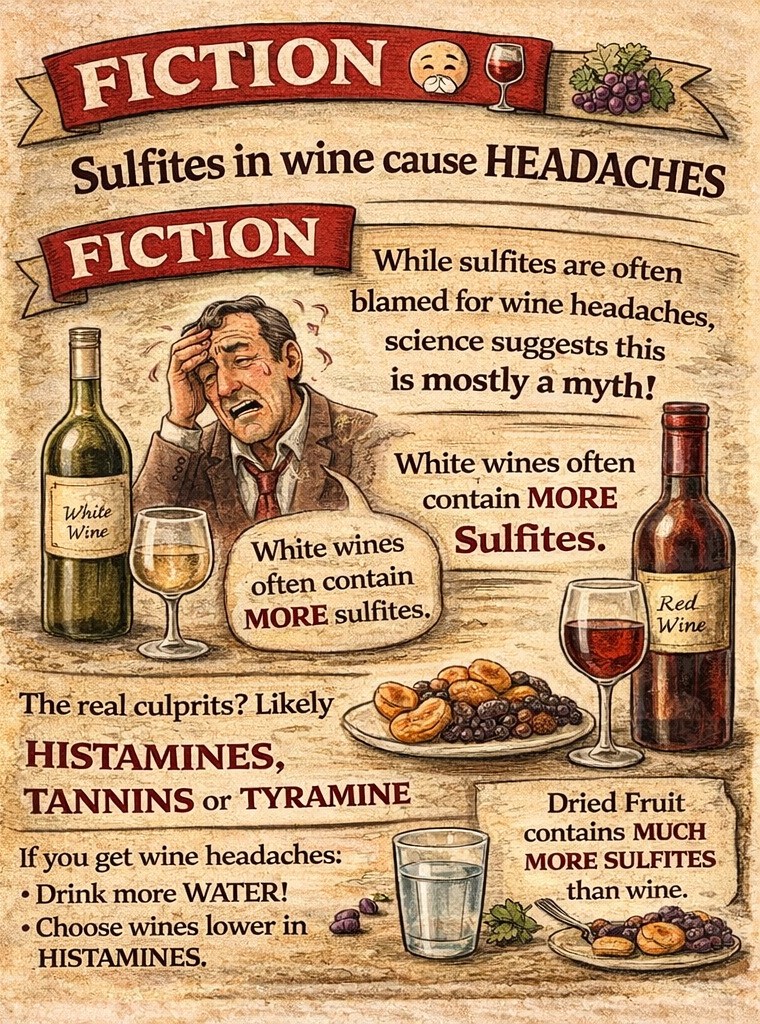
Sulphites in Wine causes Headaches
FICTION 🤧🍷 While sulfites are often blamed for wine headaches, science suggests this is mostly a myth! Sulfites (used as preservatives in wine) are much more likely to trigger asthma-like respiratory symptoms in sensitive individuals than headaches. White wines often contain more sulfites than reds, yet red wine causes more headaches. The real culprits? Likely histamines, tannins, or tyramine in red wine, or simply alcohol and dehydration. Interestingly, dried fruit contains much more sulfites than wine, yet doesn’t have the same reputation. If you get wine headaches, try drinking more water, choosing wines lower in histamines, or considering whether it’s the alcohol itself.
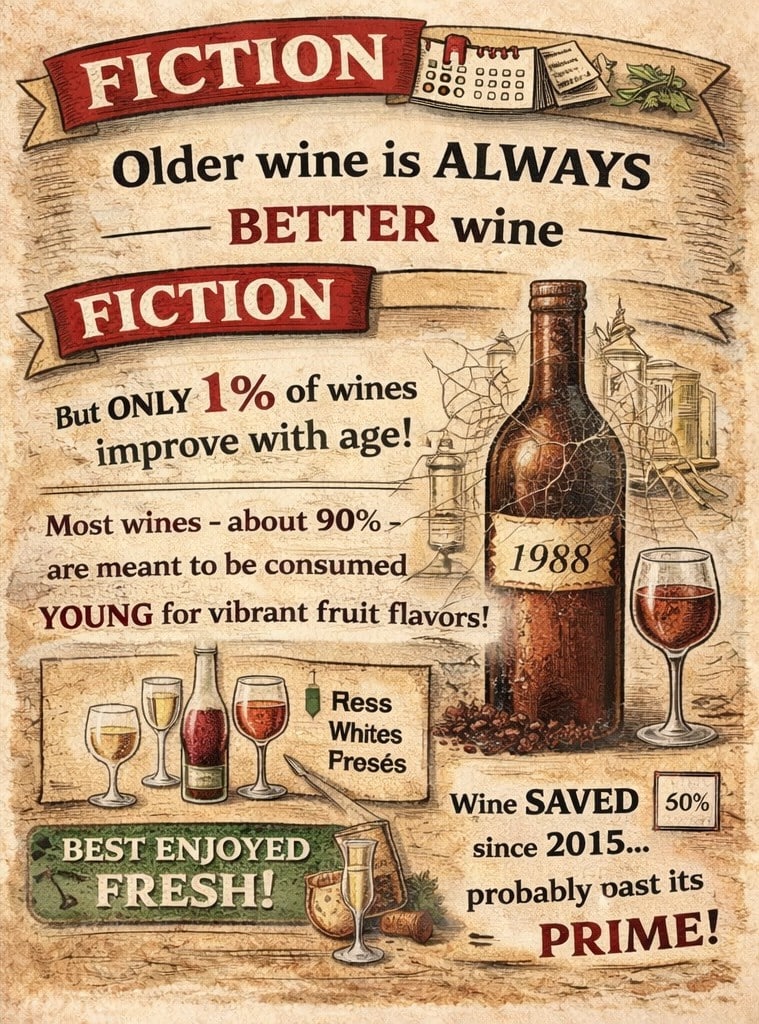
Older wine is always better wine
FICTION 📅🍷 This is one of the biggest wine myths! Only about 1% of wines actually improve with age. Most wines – about 90% – are meant to be consumed within 1-3 years of release. Many wines, especially fresh whites, rosés, and light reds, are best enjoyed young when their fruit flavors are vibrant. Even among age-worthy wines (like fine Bordeaux, Burgundy, or vintage Port), there’s a drinking window – too old and they’ll decline. Age-worthy wines need specific characteristics: good acidity, tannin structure, and concentration. That bottle you’ve been “saving” from 2015? Unless it’s a specific premium wine designed for aging, it’s probably past its prime!
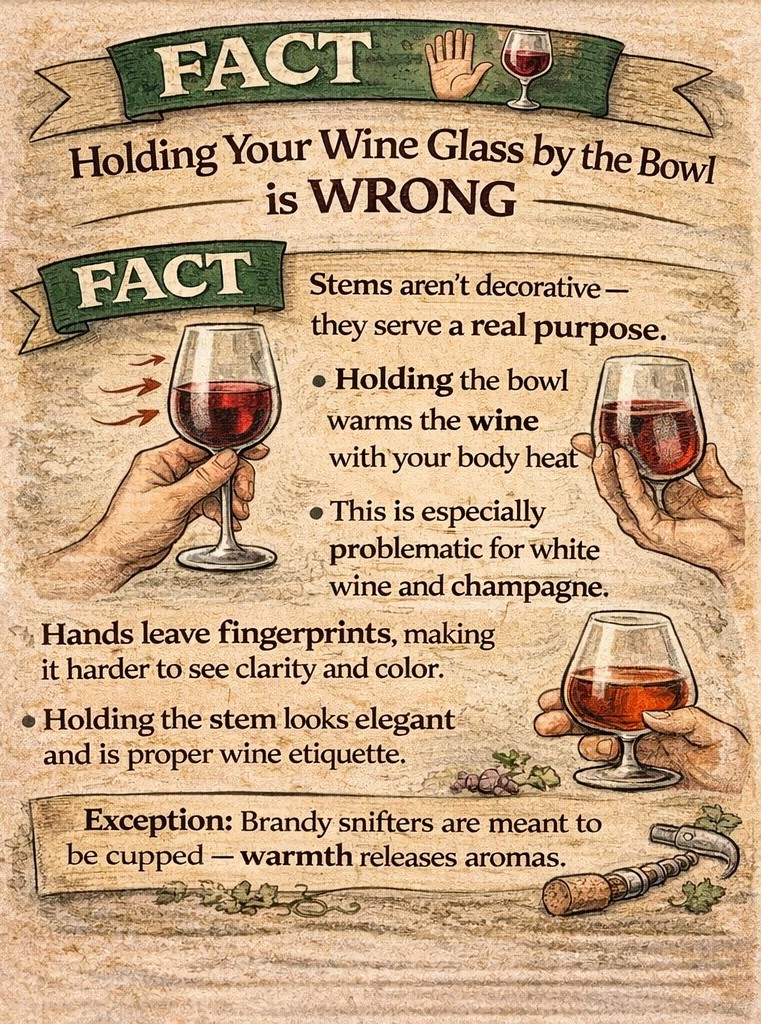
Holding your wine glass by the bowl is wrong
FACT 🤚🍷 Those long stems aren’t just decorative – they serve a real purpose! Holding a wine glass by the bowl warms the wine with your body heat, which is particularly problematic for white wines and champagne that should be served chilled. Your hands also leave fingerprints on the glass, making it harder to appreciate the wine’s color and clarity. Plus, holding the stem or base looks more elegant and is proper wine etiquette. The only exception? Brandy snifters are designed to be cupped, as the warmth releases aromatic compounds
Women are more sensitive to wine flavors than men
FACT 👃🍷 Science backs this up! Studies show that women generally have a better sense of smell than men, and since smell is crucial to taste (up to 80% of what we “taste” is actually smell), women often detect more nuances in wine. Women also tend to have more taste buds than men. This doesn’t mean men can’t be excellent wine tasters – training and experience matter enormously – but on average, women have a physiological advantage when it comes to detecting subtle flavors and aromas in wine.

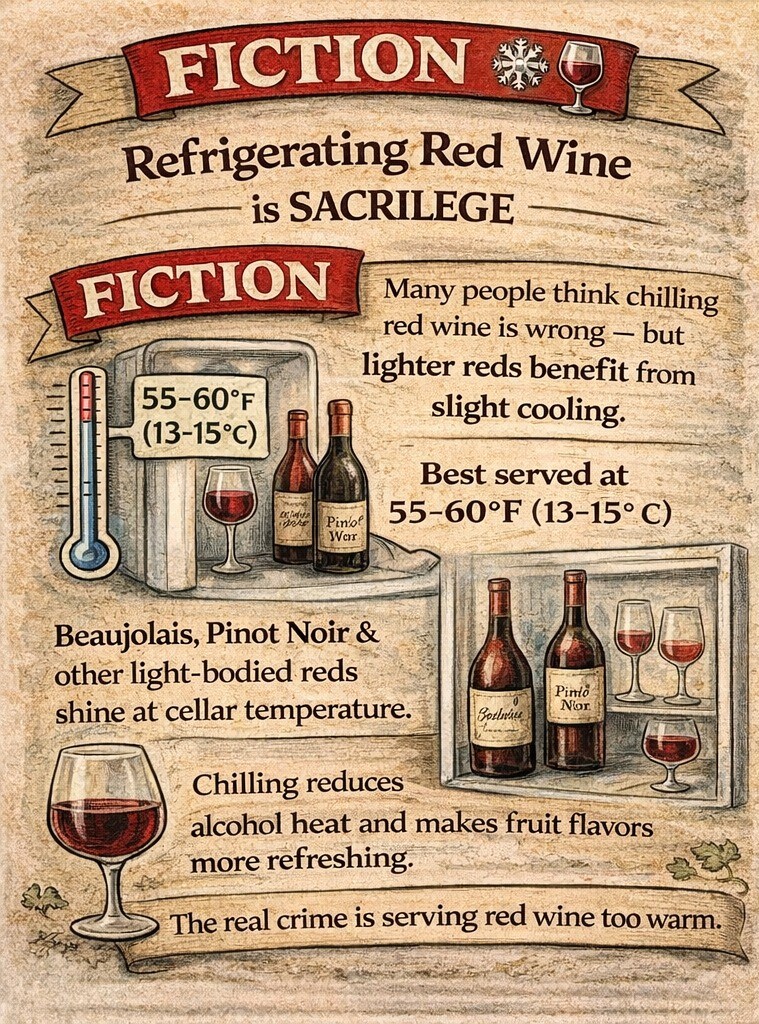
Refrigerating Red Wine is Sacrilege
FICTION ❄️🍷 Many people think refrigerating red wine is sacrilege, but lighter reds actually benefit from slight chilling! Beaujolais, Pinot Noir, and other light-bodied reds are delicious when served at 55-60°F (13-15°C) – cellar temperature, which is cooler than most homes. Chilling tones down alcohol heat and makes fruity flavors more refreshing. In hot weather, even fuller reds can benefit from 15-20 minutes in the fridge. The real crime is serving red wine too warm, which makes it taste flabby and overly alcoholic!
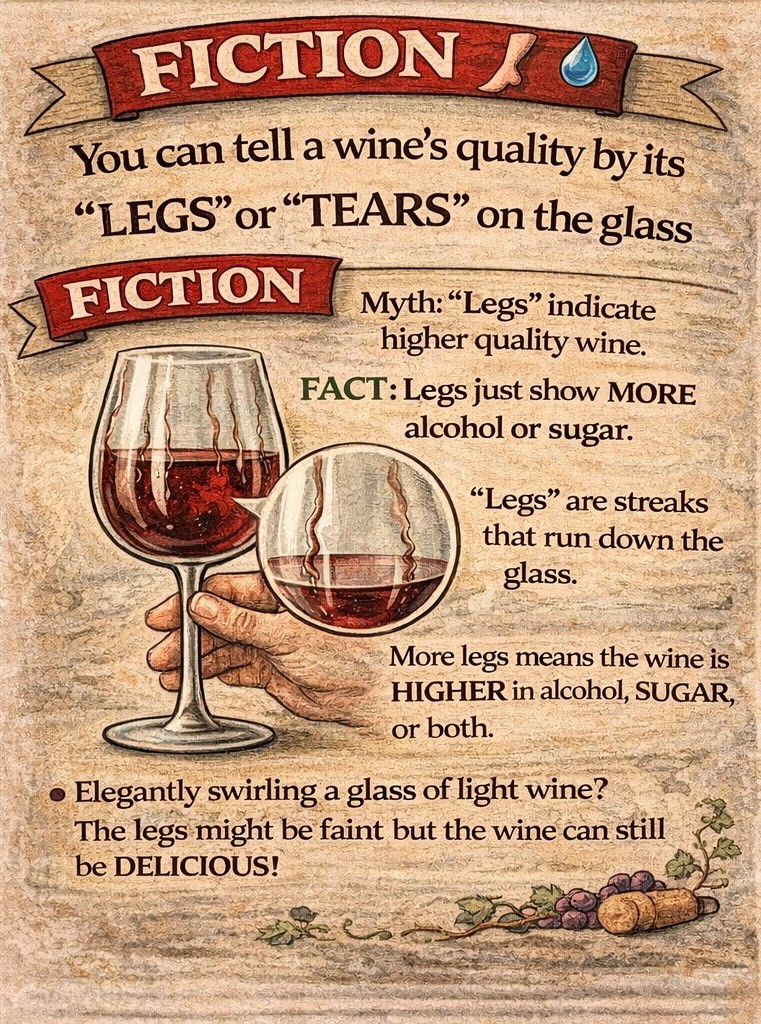
You can tell a wine’s quality by its “legs” or “tears” on the glass
FICTION 🦵💧 Those streaks that run down the inside of your glass after swirling (called “legs,” “tears,” or “church windows”) are often thought to indicate quality, but they actually just show alcohol and sugar content! The phenomenon is caused by the Maraoning effect: alcohol evaporates faster than water, creating surface tension differences. More pronounced legs mean higher alcohol content or more residual sugar – not necessarily better quality. A light, elegant wine with lower alcohol might have thin legs but be absolutely delicious!
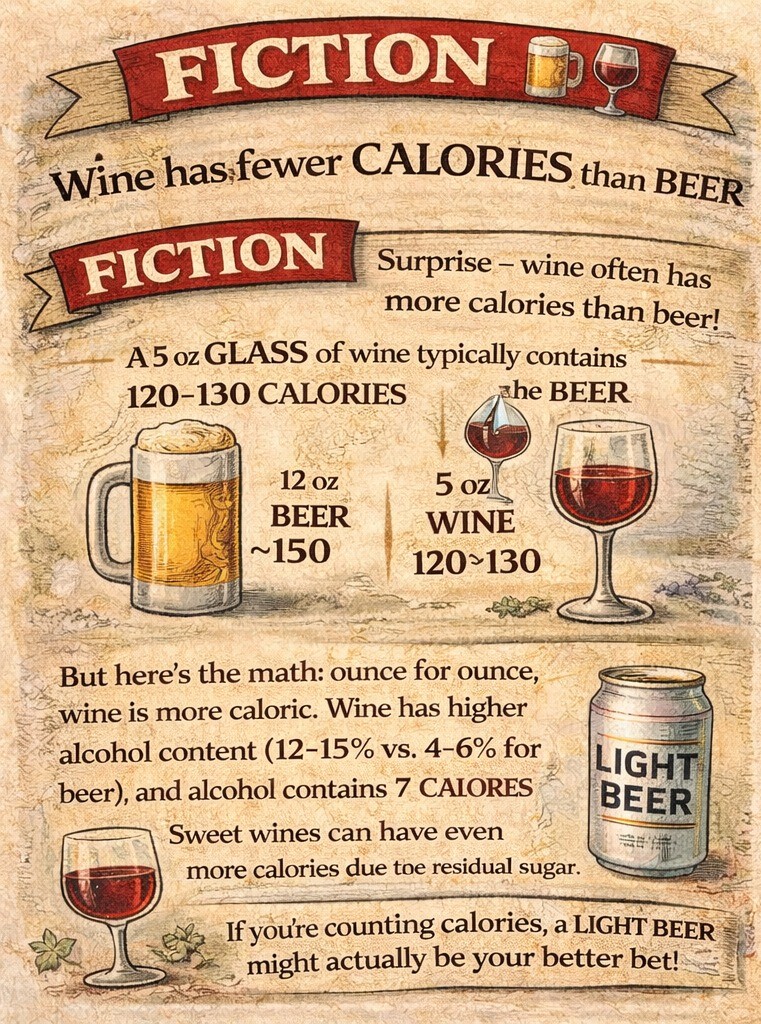
Wine has fewer calories than beer
FICTION 🍺🍷 Surprise – wine often has more calories than beer! A 5 oz glass of wine typically contains 120-130 calories, while a 12 oz beer has around 150 calories. But here’s the math: ounce for ounce, wine is more caloric. Wine has higher alcohol content (12-15% vs. 4-6% for beer), and alcohol contains 7 calories per gram. Sweet wines can have even more calories due to residual sugar. The driest, lowest-alcohol wines will have the fewest calories. If you’re counting calories, a light beer might actually be your better bet!
Natural wine means it’s healthier or organic
FICTION 🌿🍷 “Natural wine” is a trendy term, but it’s not regulated and doesn’t necessarily mean healthier or organic! Natural wine generally means minimal intervention: native yeasts, no added sulfites (or very minimal), and no filtration. However, it can still be made from conventionally-grown grapes with pesticides. “Organic” and “biodynamic” have actual certifications about how grapes are grown. Natural wines can be funky, cloudy, and unpredictable – sometimes wonderfully complex, sometimes unpleasantly flawed. They’re not inherently healthier, just made differently. If health is your concern, look for “organic” certification instead!

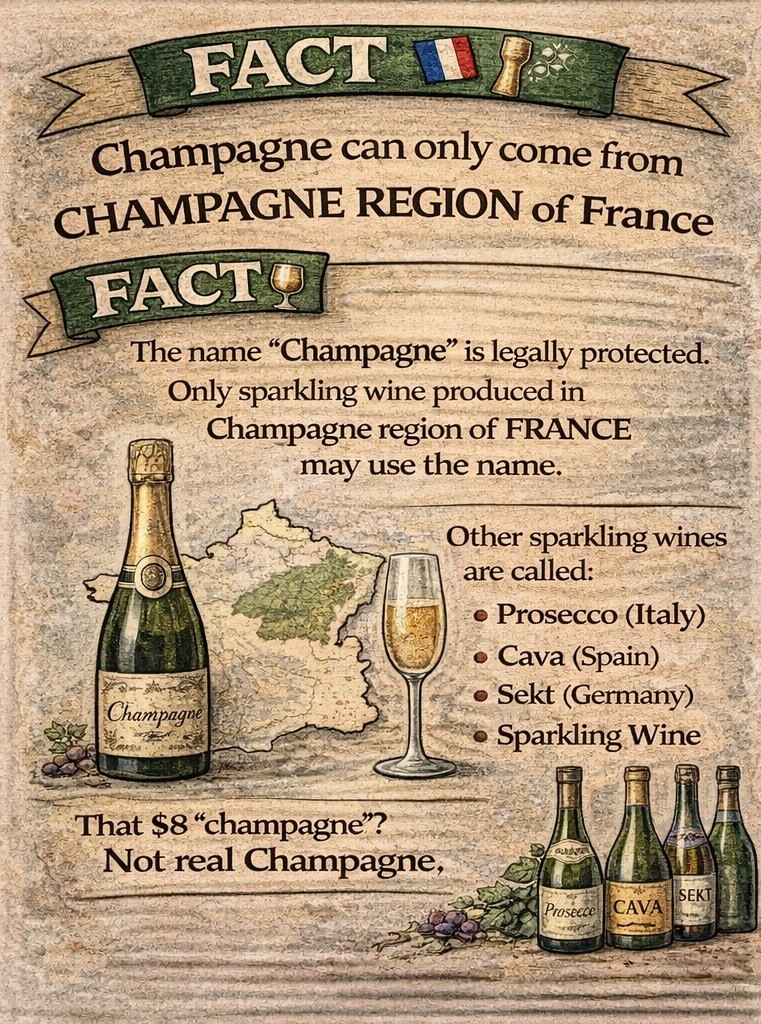
Champagne can only come from the Champagne region of France
FACT 🇫🇷🍾 This one is legally true! The name “Champagne” is protected by European law and can only be used for sparkling wine produced in the Champagne region of France using specific methods (méthode champenoise). Similar sparkling wines from other regions must use different names: Prosecco (Italy), Cava (Spain), Sekt (Germany), or simply “sparkling wine” (everywhere else). Even French sparkling wine from outside Champagne must be called Crémant. This protected designation ensures authenticity and maintains the region’s reputation. So that $8 “champagne” at the grocery store? Definitely not real Champagne!